
When a myocardial infarction occurs, blood stops circulating and properly nourishing the heart muscle cells. The heart loses strength to beat due to the death of cells in the injured area, which have stopped receiving blood from the coronary arteries.
As a result of cell death, a permanent non-contractile scar is generated, which affects the heart’s ability to beat. In extreme cases, where the damage is very extensive, the patient may need a heart transplant. However, it is more common for a residual scar to remain that dilates the heart and causes the patient to progress to heart failure. Depending on the severity, this can affect the ability to carry out activities of daily living, as well as the quality and expectancy of life.
Recovering some of the strength to pump blood is one of the objectives pursued by the ICREC (Heart Failure and Cardiac Regeneration) research group of the Germans Trias i Pujol Research Institute (IGTP).
One of the approaches to achieve this is new therapies based on the application of stem cells and tissue engineering to promote the regeneration of damaged tissues. One of the challenges has been to find the most optimal way to introduce stem cells to the area of the infarction. Previous studies had shown that, when administered directly by injections into the myocardium itself or intravenously, the cells died before they could promote benefits or were directed non-specifically towards organs other than the heart.
For this reason, the Germans Trias researchers have sought a way to incorporate the cells into a pericardial matrix, acting as a vehicle, which allows the cells it contains to be applied directly to the infarcted area.
Thus, they developed PeriCord, a bioimplant formed by decellularized human pericardium and enriched with mesenchymal stem cells from umbilical cord in collaboration with the Barcelona Blood and Tissue Bank (BST). The researchers named it PeriCord, in honor of the two components that form it: the pericardium and the umbilical cord, and it is a tissue engineering product.
PeriCord is made up of a membrane that comes from the pericardium of a tissue donor that the BST has decellularized and freeze-dried. It has then been recellularized with these umbilical cord stem cells. Once in the operating room, surgeons attach the lab-generated bioimplant to the affected area of the patient’s heart, covering the scar left by the infarction.
At the end of 2018, the definitive approval of PeriCord for human use was obtained by the Spanish Agency for Medicines and Health Products (AEMPS) and the first intervention of this new therapy was carried out in 2019 within a clinical trial called Periscope to demonstrate its clinical safety.
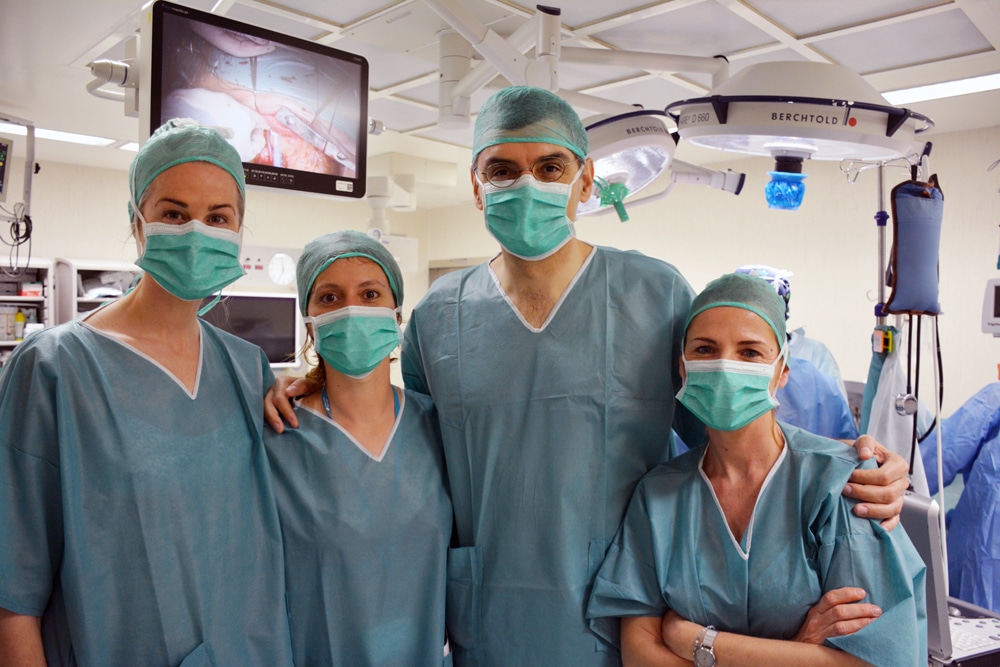
The drug is manufactured in the BST’s advanced therapy clean rooms and implanted in the operating rooms of the Germans Trias Hospital. The study included 12 patients who were candidates for coronary bypass, of whom 7 were treated with bioimplants and 5 without, to compare the results with a long-term follow-up of 3 years. The patients included in the therapy are people who have suffered a heart attack and have a reduced quality and life expectancy, and the PeriCord is applied during the coronary bypass surgery.
Statements by Dr. Antoni Bayés, researcher of the ICREC group and first author of the article:
“This pioneering clinical trial in humans comes after many years of tissue engineering research, representing a very innovative treatment for patients who have a scar on their heart as a result of having suffered a heart attack,” referring to the PeriCord. It is very satisfying to think that “thanks to the donors, we are providing a new therapeutic tool that can improve the patient’s quality of life,” he adds. “It has been a long journey since the first preclinical tests,” explains Bayés.
The phase I study has demonstrated the safety of this new drug in the context of myocardial infarction. In addition, it has been shown to be a drug with excellent biocompatibility, radically minimizing the risk of rejection and ensuring that the body tolerates it perfectly. On the other hand, anti-inflammatory properties have been observed, which open the door to broader applications in pathologies where there is inflammation.